
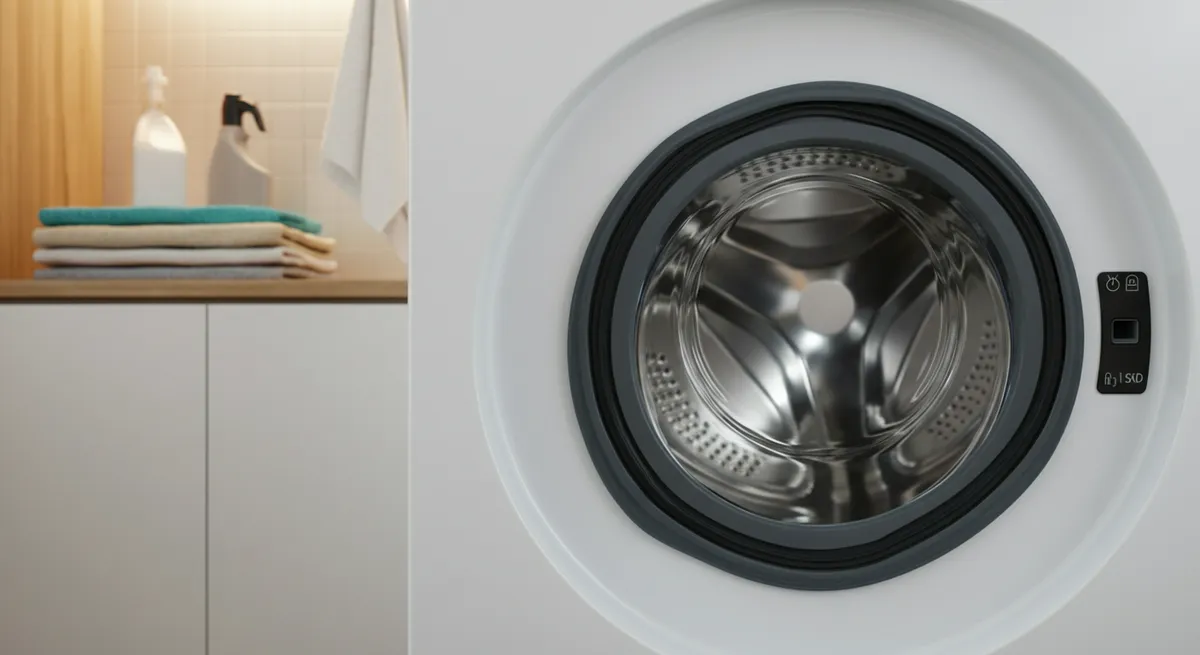
A washer leak and a musty smell deserve separate checks. Note where the water appears and whether it happens while filling, washing or draining. That is more useful than assuming humidity caused the problem.
Look for an accessible source
Pause the washer if it is leaking. Check for clothing caught in the door and visible residue on the seal. Look at accessible hose connections without pulling the machine out. Water backing up at the standpipe or laundry sink may be a household drain problem.
If water continues to enter, close the supply valves if they are accessible without reaching through water or near wet electrical parts. Do not touch a wet plug.
Samsung’s washer leak guide covers door seals, supply connections, drain routing and detergent use. Use the instructions for your particular model before opening a filter or changing a hose connection.
Check detergent and the drawer
Excess detergent can create too many suds. Use the detergent type specified for the washer and measure the dose for its concentration and the load. Clean the drawer and door seal as the manual directs, then check that removable parts are correctly refitted.
Deal with an odor after drainage is working
Remove wet clothes promptly and run the prescribed cleaning cycle with a compatible cleaner. Whirlpool explains why vinegar is not its recommended washer cleaning method. Do not mix cleaning products.
If a leak returns or an odor remains after cleaning, include the model, cycle, water location and checks already tried in your repair request.